Smock Oracles: The Convenience Store Clerks Who Track Luck Like Stock Prices
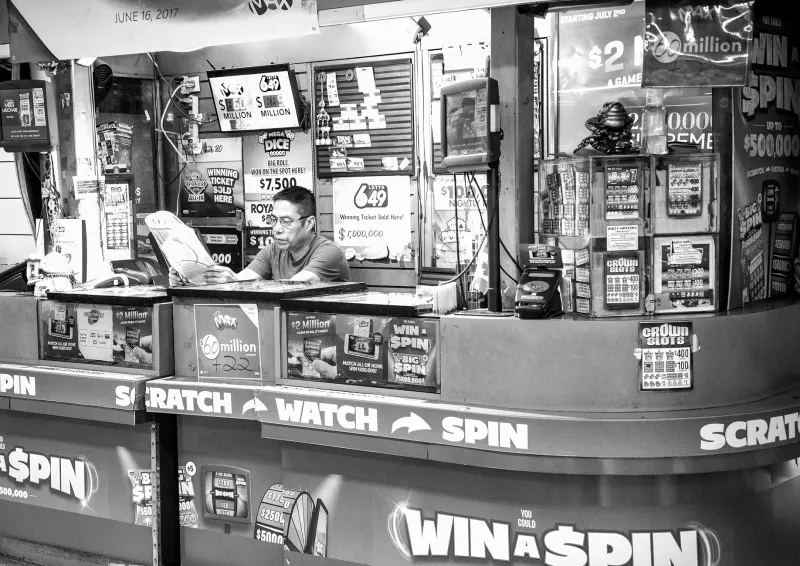
There's a moment that happens at gas stations and corner stores across America every single day. A customer walks in, squints at the scratch-off wall, and then — instead of just grabbing a ticket — asks the clerk: "Which ones are hitting?"
It sounds like a joke question. It isn't. And the answer is never a joke either.
The Counter Knows Things
Lottery tickets are supposed to be random. Every card in a roll has the same odds, the state gaming commissions insist, and mathematically speaking, that's true. But randomness on paper is not the same as randomness in practice, and the people who stand behind the counter for eight hours a day have noticed something the rest of us haven't had time to notice.
They know when a new roll went in. They remember which tickets got redeemed this week, and for how much. They've watched a guy buy five $2 tickets from the same game and cash a winner, then watched the next six buyers walk away empty. Whether or not any of it means anything, the clerks are the only ones keeping score.
So a folk science was born — one part observation, one part pattern-seeking, one part pure theater. And at the center of it sits a figure Americans don't talk about enough: the clerk-oracle.
Roll Watching, the Underground Way
Ask around long enough and you'll hear the vocabulary. "Fresh roll" means the stack just came out of the box, which some players see as an opportunity and others see as a trap. "Cold game" means a ticket nobody's won on in weeks, which some clerks quietly steer customers toward — the logic being that a game has to pay out eventually — while others steer them away from it for exactly the opposite reason.
Some clerks keep mental notes. A few, allegedly, keep actual notes: a scratchpad behind the register, a tally on the receipt paper, or — in the version of this story that circulates in every state — a whiteboard in the back room where the staff tracks which games are "live" and which are duds.
Is any of it statistically sound? Almost certainly not. Lottery security teams design these games so that no amount of roll-tracking gives anyone an edge. But that misses the point. This isn't about beating the odds. It's about the feeling of having a source.
The Neighborhood Oracle
Every regular has their clerk. The woman at the truck stop outside Amarillo who "called" a $500 winner three tickets before it happened. The guy at the bodega on a side street in Queens who won't sell you the top ticket on the wall until he's "seen how the morning's going." The overnight attendant in rural Ohio who tells you to come back Thursday because "that game pays on Thursdays." It does not pay on Thursdays. You come back Thursday anyway.
What makes these figures so trusted isn't accuracy — it's attention. In an economy where most transactions are anonymous, the clerk-oracle is someone who remembers your game, your budget, your streak. They're running the only luck advisory service in America with a free consultation built in.
There's something very 57Mumu about the whole arrangement, honestly. Numbers, patterns, tiny rituals, a little bit of belief doing a lot of heavy lifting. We built a whole site around the idea that people love playing with digits even when the digits don't love them back. The scratch-off counter is the same religion with a different building.
Why We Need Someone to Believe
Here's the part that's actually interesting, beyond the folklore. Buying a lottery ticket is an act of pure uncertainty. Humans are terrible with pure uncertainty. We want a narrative, a system, a reason this ticket and not that one.
The clerk provides that. Not because they've cracked the game's code, but because a recommendation transforms a random purchase into a decision. "The 57 is running good today" is not data. It is a story, and stories feel better than chance.
There's also a social layer here that's easy to miss. The scratch-off counter is one of the last places where strangers routinely compare notes with a third party about money and luck. People announce their wins at the counter. They confess their losses. The clerk is the priest of a very small, very American confessional, and the smock is the vestment.
The Regulators Roll Their Eyes, Politely
State lotteries are aware of all this, mostly, and their official position is that clerk folklore has no bearing on outcomes — which is correct. Some retailers do get guidance on promoting games, and a clerk who genuinely believes a game is cold might upsell it in ways that make marketers happy, but the actual draw is sealed long before the roll hits the spinner rack.
That hasn't stopped the belief economy. If anything, the total lack of verifiability makes the folklore stronger. You can't disprove a Thursday payout. You can only fail to win on a Thursday, which every gambler knows is different.
Luck, Sold Next to the Jerky
There's a beautiful absurdity to where all this expertise lives. Not a trading floor, not a casino, not an app with a predictive algorithm — a counter between the energy drinks and the beef sticks, staffed by someone making hourly wage who has become, through nothing but repetition and attention, the most consulted luck expert in their zip code.
So the next time you're standing at the spinner rack, paralyzed by forty colorful options, go ahead and ask. "Which ones hitting?" The clerk will pause, glance at the wall like a sommelier checking a cellar, and give you an answer they absolutely cannot guarantee.
Take it anyway. That's the whole game.