Deleted by Design: The Elevator Panels That Vanish Floors Nobody Wants to Ride To
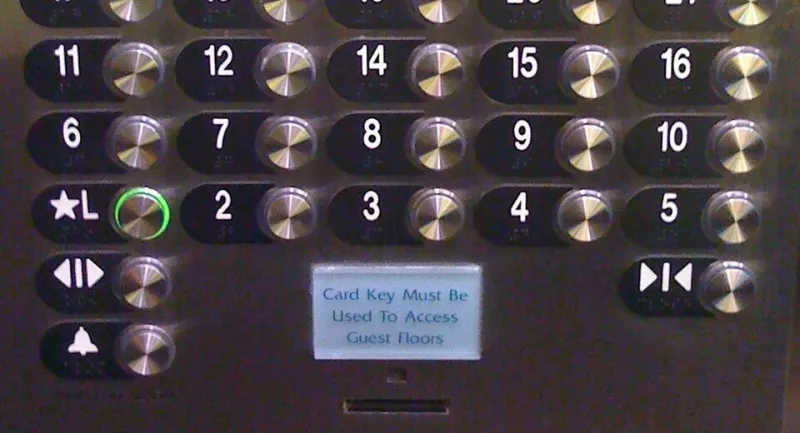
Photo: Yoshimasa Niwa from Tokyo, Japan, CC BY 2.0, via Wikimedia Commons
Stand in the lobby of a glittering condo tower in Miami or a glass office high-rise in Seattle and count the buttons. Then ride to the top and count the floors. The math won't add up — and it's not a maintenance issue. It's economics dressed up as superstition, and it's one of the quietest negotiations in American real estate.
The Panel Doesn't Lie. The Building Does.
Elevator technicians call it "the trim." When a tower goes up, the developer hands the vertical transportation contractor a button list, and that list has usually already been scrubbed. No 13. Sometimes no 14, because four sounds like death in Mandarin and Cantonese, and in cities like Vancouver, San Francisco, and Flushing, that matters commercially. Occasionally a whole run of forties disappears — 40 through 49 — so tenants on floor 50 are actually twenty-some stories up.
"I've installed cars in buildings where you go from 12 straight to 15," says a veteran tech we'll call Ray, who's spent two decades wiring cabs from Chicago to Dallas. "Nobody complains. The person on 15 knows they're on 13. They just don't want their mail to say so."
The Censorship Rankings
Based on technician interviews, permit filings, and a lot of lobby loitering, here's roughly how floors get erased, most-censored first:
- 13 — the undisputed champion. Skipped in an estimated 80%+ of US high-rises, from Boston brownstone conversions to Vegas resorts.
- 14 — the fastest-rising omission, driven by international buyers in coastal markets.
- 40–49 as a block — common in towers marketing to buyers who read digits culturally, not just individually.
- 4 — rarely skipped alone in the US, but frequently renumbered (4A, anyone?).
- Everything else — including 57 — almost never touched.
That last line is the fun part for a site named after a two-digit combo: 57 survives the cut essentially everywhere. It carries no funeral baggage, no tetraphobia, no triskaidekaphobia. It's just a number doing its job, which is more than can be said for poor 13.
Who Actually Decides?
It's rarely a dramatic meeting. Building managers describe it as a quiet calculus: what did the market study say, who's buying the penthouses, will the leasing team flinch on a tour? One property manager in Houston put it plainly: "If a floor label costs me one sale at $2 million, I'll renumber the whole tower."
Elevator manufacturers stay neutral — modern destination-dispatch systems can label floors however the owner wants. The hardware doesn't care. The buttons just obey.
What It Says About Us
There's something charmingly irrational about a species that puts a man on the Moon but won't put a 13 on a panel. Numbers are supposed to be neutral — the one language with no opinion. Yet here we are, editing them like a manuscript, deleting digits the way a gambler blows on dice.
And maybe that's the whole appeal. In a world of algorithms and spreadsheets, floor numbers are one of the last places where ordinary people still negotiate with luck directly. You press the button. You take your chances. You hope the number above your door is on your side.
We'd just note, for the record: when the panel skips 13, 14, and most of the forties, the numbers that remain tend to be the sturdy ones. Five. Seven. Fifty-seven. The survivors.
Ride accordingly.