Highway 57 and the Last Lucky Spots: Where American Luck Still Lives in Buildings
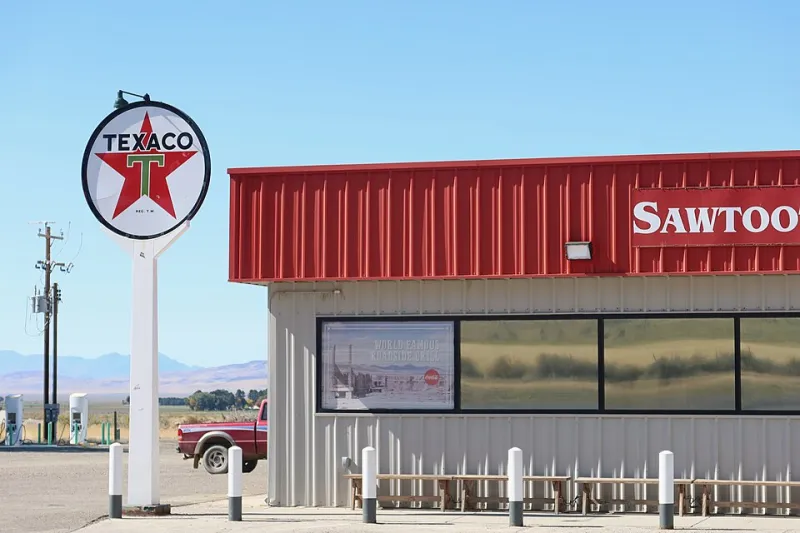
Photo: YosemiteYamper, CC BY-SA 4.0, via Wikimedia Commons
There's a particular sound a scratch-off makes when it's being scratched in a truck stop at 11 p.m. Anyone who's driven cross-country knows it — the faint rasp of a coin on latex, followed by either a sigh or a whoop. That sound is getting rarer. Apps have swallowed most of what luck used to be. But it hasn't disappeared. It just went quiet, and it moved into buildings.
We spent three weeks driving roughly 4,000 miles — much of it along two-lane highways, because that's where these places survive — looking for the last spots where Americans still test their fortune in person. What we found wasn't nostalgia exactly. It was something more stubborn.
Luck Used to Have a Front Desk
There's a reason old-timers say they're "going down to" wherever they play. Luck, historically, was a destination. You didn't pull a slot on your phone during a red light; you drove to a counter, a hall, a machine humming in a motel hallway. The location did part of the work. Regulars will tell you — half-joking, half-not — that certain ticket counters run hotter than others. That the machine by the door pays better than the one in the back.
Is that true? Statistically, no. Culturally, absolutely. The place matters because the place holds the stories. Every gas station ticket counter in America has at least one regular who won something meaningful there, and the clerk can recite the details like scripture.
The Gas Station Is the New Frontier
If you want to understand modern American luck, stand at the counter of any highway gas station between 6 and 9 a.m. This is the church of the commuter scratch-off. Truckers, nurses coming off night shifts, retirees in matching caps — they all queue with the same quiet focus.
The counter itself is a museum. Scratchers fanned out in acrylic display cases, organized by price and by superstition. Number 57 tickets sell, we were told at three separate stops, noticeably better than neighboring numbers. Nobody at the counter could explain why. Nobody needed to.
And then there are the casino-adjacent gas stops — those glowing combinations of fuel pumps, slot alcoves, and hot cases of corn dogs that dot Nevada, Louisiana, and parts of the Midwest. These are hybrid creatures: half errand, half gamble. People come in for a soda and leave having communed with a number.
Motels, Ice Machines, and the Folklore of Hallways
The motel ice machine deserves its own chapter in the folklore of American luck. Ask around long enough and someone will tell you about the machine at their regular stop — the one that dispenses ice slowly if you're due for good fortune, or the one where you always punch in room number plus seven "for the road."
At a family-run motel outside Barstow, the owner showed us a wall behind the front desk where guests have scrawled room numbers and dates going back decades — a record, she said, of the lucky stays. Her father started it. Her daughter now manages the desk. The tradition, like the ice machine, outlasts every renovation.
This is how lucky-digit traditions actually get passed down: not through apps or algorithms, but through hallway conversations and handwritten notes that nobody wants to be the one to erase.
Why the Physical Spot Still Wins
You could argue all of this is irrational, and you'd be right, and you'd be missing the point. The road trip itself is the ritual. The stop, the coffee, the ticket, the walk back to the car — it's a tiny ceremony of hope with a beginning and an end. An app gives you infinite luck with no geography, and infinite anything eventually feels like nothing.
The analog lucky spot gives you scarcity. There is one counter. It closes at a certain hour. You either went, or you didn't. That's a feeling no push notification can replicate.
A Detour List: Quirky Lucky-Number Landmarks Worth the Exit
A few stops for your next drive, state by state, chosen for charm over any actual odds:
- Nevada — The gas stops along US-95 between Reno and Las Vegas, where slot machines sit between the beef jerky and the motor oil.
- Texas — Small-town convenience stores along I-35 with scratch-off counters that double as local gossip exchanges.
- Louisiana — Truck stops off I-10 that are, functionally, small casinos with fuel pumps attached.
- New Mexico — Route 66 motels where vintage neon room numbers have inspired half a century of guest superstitions.
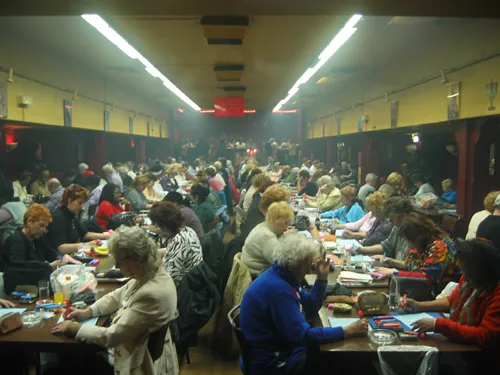
- Florida — Standalone bingo-adjacent bingo halls (yes, that's the vibe) along the western coast, where afternoon sessions run on a rail-thin margin and pure enthusiasm.
- South Dakota — Roadside stops near Wall where travelers rub the same lucky brass fixtures that have been rubbed by a million hands before them.
None of these will change your fortune. All of them will change your drive.
The Last Ticket
The clerk at a desert gas stop, somewhere past the point where the radio gave up, told us she's worked the counter for nineteen years. She's seen people cry at that counter. She's seen them buy a winning ticket for a stranger who was short on cash.
"The phone can't do that," she said.
She's right. Luck used to live in locations because locations hold people, and people are the actual mechanism of the ritual. The scratch-off is just the excuse. So the next time you're on a long highway and you see a lit-up sign promising tickets, ice, and a room for the night — consider the detour. Bring a coin. Pick a number. Any number. But maybe start with fifty-seven.