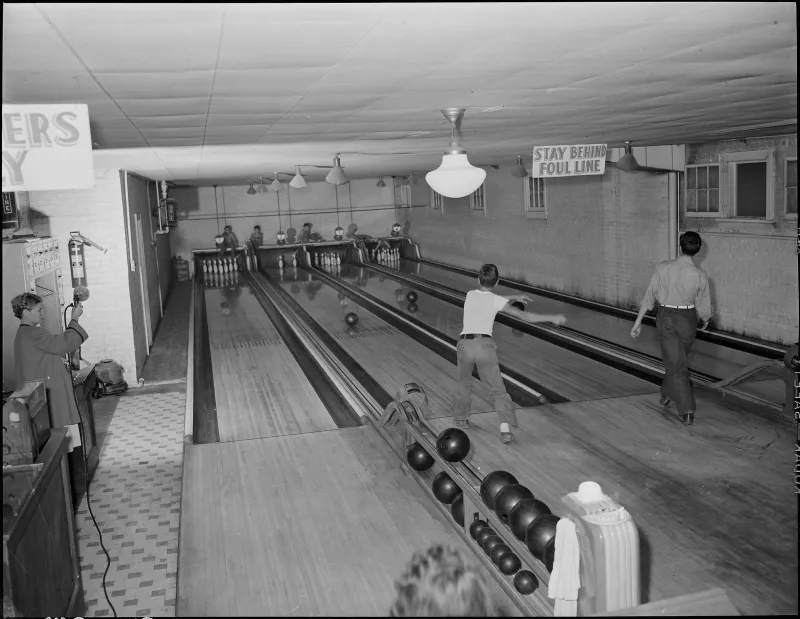
The Click You Can't Download: Why Americans Still Crave Physical Number Games
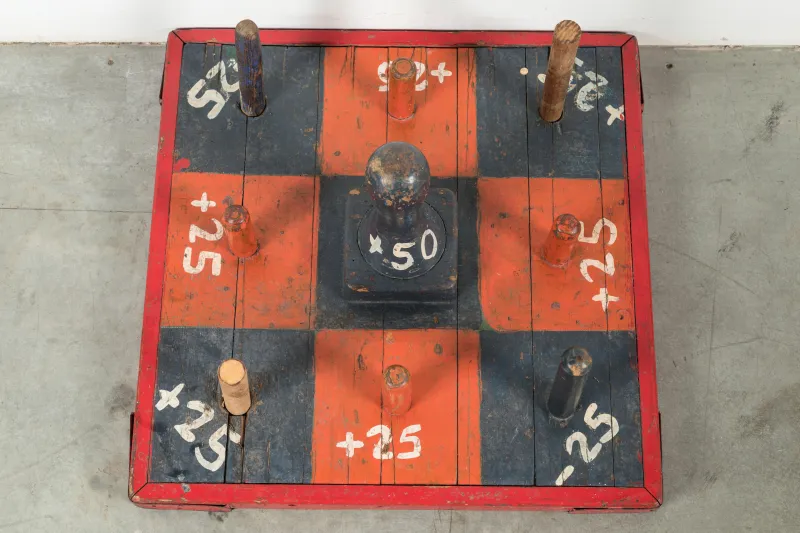
Photo: vintage carnival ring toss game wooden score counter, via a.1stdibscdn.com
There's a sound an app can't make. It's the clack of a wooden number tile being flipped at a church raffle board, the satisfying thunk of a ring landing on a peg worth 25 points, the scratch of a hole punch going through a card at a VFW fish fry. If you've grown up tapping glass, these sounds hit differently. And according to the people who run America's physical number games, they're hitting harder than ever.
The Punch Card Refuses to Retire
Walk into nearly any Veterans of Foreign Wars hall between Akron and Abilene on a Friday night and you'll find the same scene: a volunteer with a hole punch, a stack of numbered cards, and a bucket of quarters. The game might be called Queens, Keno, or just 'the card game,' but the mechanics are ancient — match your digits, wait for the call, hope tonight's your night.
'We tried an app version in 2019,' one Ohio hall manager told us, requesting anonymity because, as she put it, 'the regulars would riot.' 'Nobody used it. People want to hold the card. They want to fold the corner when they're one number away. You can't fold a corner on an iPhone.'
County Fairs: The Original Leaderboard
Every summer, state and county fairs across the country run what might be the most honest number games in America. Milk bottle throws scored on chalkboards. Ring toss booths where the operator flips a metal counter with his thumb. The balloon dart wall, where your number of pops determines your prize.
These aren't games in the digital sense — there's no progression system, no daily login bonus. There's just a number, a physical result, and a stranger who saw you earn it. That last part matters more than designers like to admit. A high score nobody witnessed is a lonely high score.
What the Flippers Know
The operators keeping these games alive share a few traits. They're obsessive about their equipment — a 1950s rotating bingo cage gets serviced like a classic car. They know their regulars' lucky numbers. And they understand something that took the digital gaming industry two decades to rediscover: anticipation is the product.
A bingo cage rattling for four seconds builds more tension than any loading screen. The pause before a fair operator reveals whether your ring stayed on the peg is pure, uncut suspense — no animation budget required.
What We're Stealing (Professionally)
At 57Mumu Play, we spend our days in the digital number game space, so we came back from reporting this piece with a to-do list:
- Make results feel physical. A number landing should have weight — a beat, a sound, a moment of resistance.
- Celebrate the near miss. Punch card players talk about 'the one that got away' for weeks. Digital games often skip right past the drama of almost.
- Let people see each other. The VFW hall isn't really about the cards. It's about groaning in unison when the caller skips your number.
- Keep the ritual. Same game, same time, same crowd. Consistency is a feature, not a bug.
The Token in Your Pocket
There's a reason arcades sold tokens instead of just charging by the swipe: the physical currency made the play feel real. Most of those tokens are gone now, melted or sold as nostalgia on eBay. But the instinct they represented — that a game should cost something tangible and pay back something tangible — lives on in every church basement and fairground midway in the country.
Digital number games aren't going anywhere. Neither are we. But the next time your counter flips over to a winning number on your screen, spare a thought for the volunteer with the hole punch who's been making that feeling by hand for forty years.
Some clicks you just can't download. But you can sure try to earn them.