Number 57, Extra Fortune: The Quiet Lottery of the Chinese Takeout Menu

Photo by Photo by Yunshuo Qu on Unsplash on Unsplash
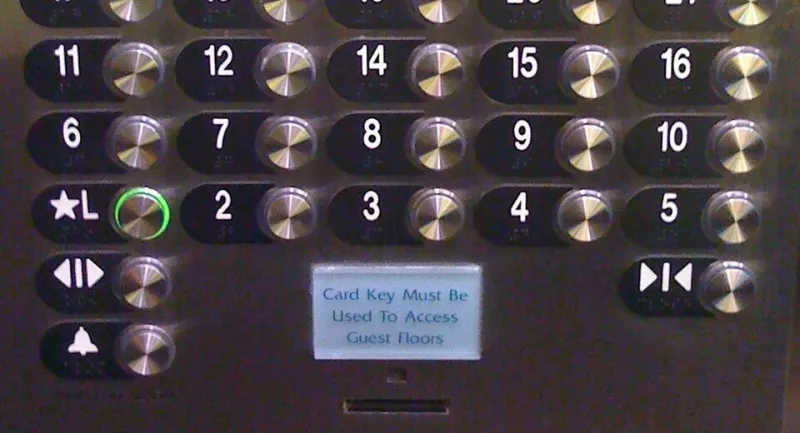
There is a menu held to a refrigerator with a magnet in nearly every American city, and it has more numbers on it than a bingo card. Combo 1 through Combo 143, give or take. Nobody in the house has ever read all of them. They order 57 — chicken with broccoli, pork fried rice, an egg roll, and a fortune cookie that will be read aloud and immediately forgotten. The digits never appear on the receipt. They don't need to. By the time the phone call ends, "fifty-seven" has already done its job.
That is the odd genius of the Chinese-American takeout menu. It is a price list, a puzzle grid, and a very low-stakes lottery, all photocopied onto one sheet and taped inside a plastic sleeve. And it outsources a decision most of us are too hungry to make.
A Grid Built for People in a Hurry
The numbered combo plate is a thoroughly American invention — a mid-century accommodation to customers who wanted protein, rice, and a vegetable on one line item with one price. As Chinese restaurants spread into strip malls and delivery zones from the 1960s onward, the menu grew a spine: columns and columns of integers, each one a complete dinner.
What that structure accidentally created was a game board. A menu with 80 combos is not a list; it's a field of choices with implied ranking, implied hidden gems, implied favorites. Regulars develop theories. Combo 12 is "the cheap one." Combo 88 is "the one that feeds two." Combo 57 — and this comes up more than you'd think — is "the one that's never let me down."
Why Some Digits Sell Better Than Others
Restaurant owners will tell you, without much prompting, that certain numbers simply move. Part of that is cultural arithmetic carried over from Chinese numerological tradition, where 8 sounds like prosperity and 6 suggests smooth sailing. Part of it is the opposite: 4, which sounds like the word for death in Mandarin and Cantonese, gets a wide berth from plenty of customers — and a fair number of owners quietly skip it altogether, jumping from 3 to 5 or relabeling the fourth combo as something else entirely.
But here's the thing that gets lost in the fortune-telling: most American customers choosing combo 8 are not thinking about homophones. They're thinking that 8 looks clean, that 6 is a friendly number, that a two-digit combo with a 7 in it feels luckier than a plain 14. The superstition has been laundered into pure aesthetics. Nobody has to know why they like it.
And then there's the accidental luck of the layout. Whichever combo lands at the top of a column, nearest the fold, or right beside the lunch specials gets ordered more — a phenomenon any menu designer knows and few will admit to engineering.
The Kitchen Notices
Family-run places are observant in ways that chain restaurants can't afford to be. Ask an owner in Queens or Houston or Sacramento and you'll hear variations on the same story: the same combos get ordered over and over, and after a while the kitchen starts treating them differently. The ingredients for 57 are prepped in slightly larger batches. The cashier learns to say the number back with a little more confidence.
Some restaurants lean in. Renumbering a menu is expensive and pointless, but adding a "lucky combo" callout on a paper insert costs nothing. One shop in Ohio reportedly rebuilt its entire combo list around customers' favorite digits — a small act of menu engineering dressed up as fortune.
The Menu as Cultural Shorthand
What makes this more than a quirk is who's reading it. The numbered combo menu is one of the few pieces of everyday American design that everyone uses and nobody studies. It's a shared vocabulary across generations and languages: point at the number, say the number, get the food. A grandmother who doesn't read English and a college student ordering at 1 a.m. use the exact same system.
That's a kind of accessibility you don't get from an app. No account, no login, no surge pricing. Just digits on paper, arranged so that any one of them will produce dinner.
What the Number Actually Says
Ordering combo 57 doesn't summon luck. It summons chicken. But the ritual is real, and it's worth naming: we like letting a number decide for us, especially when the stakes are a Tuesday night and eleven dollars.
So the next time you call it in, look at the grid a second longer. Somewhere in those columns is a number you already trust, and you probably couldn't explain why if asked. That's fine. The kitchen doesn't need an explanation either — just the number, read clearly, before the phone gets too busy.